September Rota Planning: How to Reset Staff Schedules After Summer


James Butler

Published: 26th September 2026
September can feel like a second January for businesses that run on shifts. Summer holidays are winding down, students may have new timetables, seasonal staff may be leaving, parents settle back into school routines and the temporary arrangements that got the team through July and August suddenly need another look.
The problem is that rotas rarely reset themselves. An availability message sent three months ago stays in somebody's notes. Extra shifts become an unofficial working pattern. Holiday builds up. Overtime and TOIL are forgotten. Managers keep copying last week's rota because it mostly works.
September is a useful point to stop carrying those assumptions forward. You do not need to rebuild the entire scheduling process. A focused rota reset can make the autumn easier to manage and expose small problems before they become the normal way of working.
1. Ask for fresh employee availability
Availability is one of the first things to go stale. This is especially common with students, part-time staff, employees with caring responsibilities and people whose other commitments change throughout the year.
If September's rota is being built from availability collected in May or June, managers can end up creating shifts that need changing almost as soon as they are published. Instead, ask employees to review what they have previously supplied and confirm when they can realistically work during the autumn.
- Ask flexible staff to confirm their current available days and times.
- Check whether recurring restrictions are still relevant.
- Remove assumptions based on temporary summer arrangements.
- Record the information somewhere managers can actually use while scheduling.
FlowRota's employee availability feature keeps this information connected to rota planning, so managers can see when somebody says they can work before assigning the shift.
2. Check how much annual leave is still outstanding
Summer may be the busiest period for holiday requests, but it does not necessarily use everyone's allowance evenly. Some employees will have taken most of their leave already; others may still have a significant amount remaining.
The later this becomes visible, the harder it can be to accommodate requests without putting pressure on the rota. September is a good time to look at booked, taken and remaining leave before the final part of the year becomes crowded.
- Review remaining allowances across the team.
- Check leave that has already been approved for autumn and winter.
- Look for periods where several employees are already away.
- Remind staff of your normal leave-request process where appropriate.
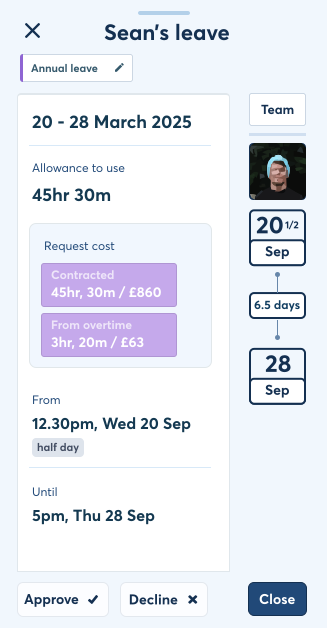
Keeping requests, balances and approved leave together makes this much easier than comparing a holiday spreadsheet with a separate rota. See how FlowRota handles leave management and leave requests and approvals .
3. Review overtime and TOIL built up over summer
Busy summer periods often create extra hours. Someone covers a colleague's holiday, stays late during a busy service or picks up additional shifts for several weeks. Individually, those changes can look minor. Across a team, they can add up quickly.
Before autumn scheduling settles into a new routine, check whether summer cover has created overtime or TOIL that still needs to be paid, approved, used or otherwise dealt with under your normal process.
- Look for employees who repeatedly worked beyond their usual pattern.
- Check outstanding TOIL balances and agreed overtime.
- Make sure temporary extra hours have not quietly become expected hours.
- Keep the record of what was worked separate from what was merely scheduled.
FlowRota can keep overtime and TOIL alongside the wider rota, while timesheets help managers compare scheduled work with actual hours.
4. Compare the rota with the hours people actually worked
A rota tells you what was supposed to happen. The hours actually worked tell you what happened in practice. September is a useful point to compare the two.
If the same employee is regularly staying later than scheduled, being called in early or picking up uncovered work, that can be a sign that the rota no longer reflects the real staffing requirement. Equally, consistently unused scheduled hours may suggest that some periods are being overstaffed.
Do not focus only on the total number of hours. Look for patterns: particular days, teams, locations or times where the planned rota repeatedly differs from reality. Those patterns are more useful for the next rota than simply copying the previous week's shifts.
5. Decide what happens to seasonal and temporary arrangements
Summer often introduces arrangements that were never intended to last. Seasonal workers join. Existing employees temporarily work more hours. Teams borrow staff from one another. Managers cover gaps themselves.
The danger is allowing a temporary fix to continue simply because nobody has formally reviewed it. Ask which summer arrangements should stop, which should continue and which have revealed a more permanent staffing need.
- Archive or update people who are no longer part of the active rota.
- Confirm whether temporary increases in hours are ending.
- Review employees working across more than one team or location.
- Identify recurring gaps that may need a longer-term solution.
6. Find the shifts that keep causing problems
Every rota has awkward shifts, but the same shift becoming a problem every week is useful information. Maybe Saturday evening is repeatedly swapped. Perhaps an early Monday shift is regularly declined. Maybe one location always needs last-minute cover.
Instead of treating each incident as a separate problem, look for repetition. A difficult shift may need a different start time, different staffing level, a wider pool of eligible employees or a more deliberate approach to availability.
The aim is not to eliminate every rota change. Flexible teams will always change. The aim is to stop solving the same avoidable problem every week.
7. Check whether your regular rota still matches demand
Copying a previous rota is convenient, but convenience can hide outdated assumptions. Customer demand, opening hours, bookings, production requirements and delivery patterns can all change between summer and autumn.
Before repeating the same pattern into October and November, check whether the busiest and quietest periods are still where you think they are. You may find that one shift needs another person while another no longer needs the cover it had during summer.
Even small adjustments matter when they repeat every week. One unnecessary four-hour shift copied across the next twelve weeks is 48 hours of staffing. One consistently understaffed period can mean twelve more weeks of managers scrambling for cover.
8. Set a cleaner baseline for the rest of the year
Once the review is complete, use it to create a new baseline rather than another temporary patch. Update the information that managers rely on, then build the next rota from that current picture.
- Current employee availability
- Accurate active staff and team membership
- Known autumn and winter leave
- Up-to-date overtime and TOIL records
- Regular shifts that reflect current demand
- A clear process for future requests and rota changes
This does not make the rota fixed. It gives managers a more accurate starting point, so the changes that do happen are genuine changes rather than corrections to old information.
A 30-minute September rota reset
If a full staffing review sounds like another job for an already busy manager, start smaller. A useful reset can begin with a short review of the information behind the rota.
- 5 minutes: identify availability that may be out of date.
- 5 minutes: check remaining and already-booked leave.
- 5 minutes: review overtime, TOIL and unusual extra hours.
- 5 minutes: remove or update temporary summer staffing arrangements.
- 5 minutes: identify shifts that repeatedly get changed, swapped or left uncovered.
- 5 minutes: decide what should change in the next rota rather than the one already published.
The value is not the 30-minute deadline itself. It is creating a deliberate point where the business stops copying summer forward and starts planning from what the team needs now.
How FlowRota helps with the autumn reset
FlowRota keeps the information behind staff scheduling closer to the rota itself. Instead of checking separate spreadsheets, messages and notes before every scheduling decision, managers can keep shifts, availability, leave and worked hours in one system.
- Collect and review employee availability before scheduling.
- Keep annual leave requests, allowances and approved dates visible.
- Track overtime and time off in lieu alongside normal working hours.
- Compare scheduled shifts with actual hours through timesheets.
- Manage employees across teams and locations.
- Keep rota changes and requests recorded instead of scattered across messages.
The result is not a rota that never changes. It is a scheduling process where managers have better information when they make the first decision, reducing the amount of avoidable fixing afterwards.
Give your autumn rota a cleaner start
Keep availability, leave and working hours connected to the rota
FlowRota helps small and growing teams plan shifts from current information, manage changes and keep staff scheduling in one place.
See how FlowRota simplifies staff scheduling