Managing Holiday Requests: A Practical Guide for UK Shift Teams


James Butler

Published: 10th November 2025
Holiday requests are easy to approve when one person asks for a quiet Tuesday off. They become harder when three employees want the same bank holiday weekend, the school summer holidays are approaching, and the rota still needs a key holder, a supervisor, a trained first aider, or someone who can close the building.
For shift-based businesses, annual leave is not just an HR admin task. It directly affects cover, fairness, payroll, morale and customer service. A good holiday-request process should answer four questions quickly: does the employee have enough entitlement, is there enough cover, is the decision fair, and has the approval been reflected in the rota?
This guide explains how small UK employers can manage holiday requests more clearly, especially where teams use variable hours, part-time contracts, zero-hours arrangements or rolling rotas. For the wider scheduling picture, see our guide to why small businesses move from spreadsheets to a rota app .
The legal baseline: entitlement comes first
Most UK workers are entitled to 5.6 weeks of paid annual leave. For someone working five days a week, that normally works out as 28 days, although bank holidays may be included depending on the employment contract. Part-time staff still receive 5.6 weeks, but proportionate to their working pattern.
That distinction matters. A manager can control when holiday is taken, but they should not accidentally block someone from taking their statutory entitlement at all. This is where disorganised spreadsheets can become risky: a request is refused during a busy period, then another request is missed, and suddenly the leave year is nearly over with unused holiday still sitting in the background.
For official entitlement guidance, employers should refer to the GOV.UK holiday entitlement page and use the GOV.UK holiday entitlement calculator for unusual patterns, starters, leavers and irregular-hours workers.
Why holiday requests go wrong in real teams
Holiday management usually fails because the request is separated from the rota. The employee asks in WhatsApp, the manager replies verbally, the spreadsheet is updated later, and the actual shift pattern is checked even later. Each handover creates a chance for something to be missed.
- Requests arrive in too many places: one in a chat, one by text, one on a sticky note, and one mentioned during a shift handover.
- Approvals are not linked to cover: a manager says yes before noticing two other people are already off that week.
- Entitlement is not visible: staff and managers both lose track of what has been booked, taken, carried over or cancelled.
- Rotas are copied without checking absence: last month’s pattern is repeated, but one employee is now on annual leave.
- Decisions feel inconsistent: one person gets every school holiday approved while another always gets refused because they ask later.
None of these are dramatic on their own. The problem is that they compound. One missed request can lead to a cover gap. One unclear refusal can create resentment. One inaccurate balance can become a payroll issue.
A simple holiday-request workflow for shift teams
A reliable leave process does not need to be complicated. It just needs to be consistent enough that employees know what to do and managers can make decisions without digging through messages.
- Request: the employee submits the dates they want off, ideally through one central system rather than a chat thread.
- Check entitlement: the manager checks whether the employee has enough remaining holiday for the requested dates.
- Check cover: the manager reviews the rota, existing absence, required roles, opening hours and any peak trading periods.
- Approve or decline: the decision is recorded with a clear status, so there is no ambiguity later.
- Update the rota: approved leave should automatically block the employee from being scheduled during that period.
- Keep a record: the business should retain an audit trail of the request, decision and any later cancellation or change.
This is exactly where a rota system helps. It brings the leave request, the entitlement balance and the rota into the same workflow rather than treating them as separate admin tasks.
Can an employer refuse a holiday request?
Yes, an employer can refuse a holiday request or cancel previously approved leave, but they must follow the correct notice rules and should have a genuine business reason. For example, refusing a request may be reasonable if too many people are already off, if the dates clash with a critical event, or if approving the request would leave the business unable to operate safely.
GOV.UK says the usual notice period for a worker booking leave is at least twice as long as the amount of leave requested, plus one day. If an employer refuses or cancels leave, GOV.UK says they must give notice at least as long as the leave requested, plus one day. ACAS also gives practical guidance on refusing or cancelling holiday requests.
In practice, businesses should avoid vague refusals such as “we can’t do that week”. A better response is specific: “We cannot approve 12–16 August because two supervisors are already on approved leave and the site would not have required cover. Please choose another week or speak to us about splitting the request.”
Fairness matters as much as entitlement
Holiday decisions are one of the fastest ways to make a team feel either respected or ignored. Staff understand that not every request can be approved. What frustrates people is when the process feels random, secretive or biased.
Fairness does not always mean “first come, first served”. That can work for ordinary weeks, but it may be too blunt for Christmas, school holidays, major events or businesses with a small number of specialist staff. A more balanced approach might combine notice deadlines, rotating priority for high-demand periods, minimum staffing rules and manager discretion where someone has a genuine need.
The important point is consistency. If your business has rules for popular weeks, publish them before the rush starts. If the manager has discretion, record the reason for the decision. That protects the business and makes the process easier for employees to trust.
Holiday requests and rota cover should be connected
A holiday calendar on its own is useful, but it is not enough for shift teams. The real question is not simply “who is off?” but “what does that do to the rota?”
For example, two people being off on the same day may be fine if they work different roles. It may be a problem if they are the only two people trained to open the store, drive the van, supervise the floor, administer medication, close the kitchen or handle cashing up. This is why leave approval should sit alongside roles, locations, skills and scheduled shifts.
FlowRota helps managers see approved holidays while building the rota, reducing the risk of scheduling someone during leave or approving a request that creates a hidden skills gap. For related scheduling risks, read our guide on what counts as working time under UK law .
Records are becoming more important
Holiday records are not just useful for admin. They help employers evidence what was requested, what was approved, what was refused, what was carried over and what was paid. ACAS guidance says that from 6 April 2026, employers must keep records of annual leave and holiday pay, including holiday taken, holiday carried over, holiday pay and payments in lieu of holiday.
That does not mean every small business needs a huge HR system. But it does mean relying on scattered messages is becoming harder to justify. If an employee queries their remaining balance, holiday pay, or whether a request was approved, the answer should be available from a clear record rather than someone’s memory.
How FlowRota simplifies holiday requests
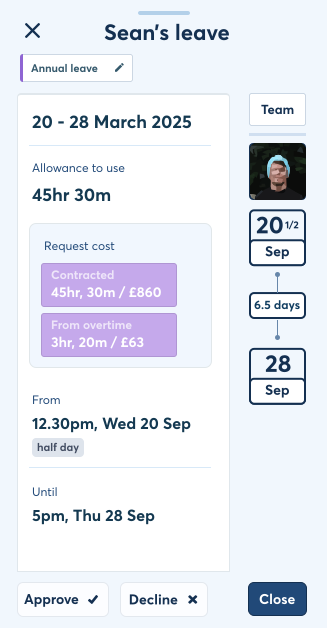
FlowRota is designed for managers who need holiday requests to work with the rota, not sit in a separate spreadsheet. It gives staff a clear place to request leave and gives managers the visibility needed to make quicker, fairer decisions.
- In-app holiday requests: staff submit leave requests directly, so requests are not buried in text messages or group chats.
- Manager approval workflow: managers can approve or decline requests and keep the decision attached to the employee record.
- Rota visibility: approved leave appears alongside scheduling, helping prevent accidental shifts during holiday.
- Availability and leave together: managers can consider both normal availability and approved absence before building the rota.
- Cleaner records: holiday decisions are easier to review later than if they were agreed verbally or spread across emails.
- Less admin chasing: employees can see the status of their request without repeatedly asking the manager.
If you are also trying to understand average hours, overtime and leave pay, see our separate guide to reference periods and holiday pay .
A practical checklist before approving leave
Before approving a holiday request, managers should quickly check:
- Does the employee have enough remaining holiday entitlement?
- Has the employee given the required notice under your policy or contract?
- Are other employees already off on those dates?
- Will the rota still have enough people with the right skills or responsibilities?
- Does the request fall during a peak period, event, stocktake or other restricted date?
- Has the decision been recorded clearly so both sides know where they stand?
This kind of checklist reduces rushed decisions. It also helps managers explain refusals calmly when there is a genuine cover issue.
Frequently asked questions
Can staff take holiday whenever they want?
Not automatically. Workers are entitled to paid holiday, but employers can manage the timing of that holiday where there is a legitimate business need and the correct notice is given.
Should holiday requests be first come, first served?
First come, first served is simple, but it is not always the fairest system for high-demand periods. Some businesses use deadlines, rotating priority or manager review for Christmas, school holidays or major events.
Can bank holidays be included in annual leave?
Yes, bank holidays can be included within the statutory 5.6 weeks if the contract says so. Some employers offer bank holidays on top of annual leave, but that depends on the contract or policy.
Why use a rota app for holiday requests?
Because leave affects the rota. A rota app helps managers approve requests with cover, skills, locations and existing absence in view, instead of making decisions from a separate spreadsheet.
Conclusion
Managing holiday requests well is about more than saying yes or no. It is about giving staff a clear process, protecting their entitlement, keeping enough cover in the business, and recording decisions properly.
For small shift-based teams, the easiest improvement is to stop separating leave from the rota. When requests, approvals and scheduled shifts are managed in one place, managers spend less time chasing messages and staff have more confidence that holiday is being handled fairly.
Note: This article is general guidance for UK employers and managers. It is not legal advice. For complex situations, check GOV.UK, ACAS or speak to an employment law professional.
Simpler leave management
Manage holiday requests without breaking the rota
FlowRota helps staff request leave, managers approve it, and rotas stay up to date — so holiday decisions are clearer, fairer and easier to track.
Try FlowRota — manage leave and rotas together