Small Business Rota App: When Spreadsheets Stop Working


James Butler

Published: 1st November 2025
Most small businesses do not start with rota software. They start with whatever gets the first few shifts covered: a spreadsheet, a WhatsApp group, a whiteboard in the staff room, or a note pinned near the till.
That can work for a while. If you have three people, fixed opening hours and very few changes, a spreadsheet may be enough. The problem begins when the rota becomes a living thing: someone changes availability, someone books leave, someone is off sick, the Saturday rush needs an extra pair of hands, and the latest version of the rota is now buried under twenty chat messages.
For a small business, that is not just annoying admin. It can affect customer service, payroll accuracy, staff trust and the manager’s ability to switch off. A rota app is not useful because it looks more modern than a spreadsheet. It is useful because it gives one shared source of truth for who is working, when they are working, and what has changed.
In the UK, small and medium-sized businesses account for the majority of private-sector employment, so small-team scheduling is not a niche problem. It is the daily operating system for cafés, pubs, salons, shops, gyms, clinics, care providers, cleaning teams, events businesses and local service companies. When the rota is messy, the whole business feels it.
1. The spreadsheet usually fails before the business realises it
Spreadsheets are flexible, which is why managers like them. They are also fragile, because they depend on people remembering which version is current. One manager downloads a copy, another edits the online version, a staff member screenshots Monday’s shifts, and by Thursday nobody is completely sure whether the update was confirmed.
The first warning sign is not always a dramatic mistake. It is usually small repeated friction:
- staff asking “am I in tomorrow?” even after the rota was sent;
- holiday requests living in texts, emails and verbal promises;
- managers manually checking whether two shifts overlap;
- late changes being missed because someone did not see the group chat;
- payroll needing a second spreadsheet to correct the first one;
- new starters being added in one place but not another.
A good rota app removes that uncertainty. The current rota is the rota. Staff check the app, managers update the app, and everyone sees the same information rather than arguing over screenshots.
2. Small teams feel rota mistakes more sharply
Large businesses can sometimes absorb scheduling mistakes with spare cover, dedicated HR teams or multiple supervisors. Small businesses usually cannot. If one person is missing from a four-person shift, the impact is immediate: slower service, stressed staff, missed breaks and a manager jumping back onto the floor.
That is why rota clarity matters more, not less, for small teams. A ten-person café, a six-person salon or a small retail store needs simple scheduling that tells people what they need to know without creating another admin system to manage.
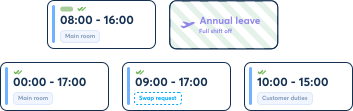
FlowRota is designed around that reality. It focuses on the everyday rota problems that small shift-based teams actually have: publishing shifts, checking availability, handling leave, tracking clock-ins, recording changes and keeping employees informed.
3. A rota app should reduce messages, not create more of them
WhatsApp is useful for quick conversations, but it is a poor place to run a rota. Messages move too fast. Important updates sit next to jokes, customer issues, photos and unrelated chat. A rota change may be technically “sent” but still practically missed.
With a rota app, the schedule update is attached to the shift itself. Staff do not need to scroll backwards through a group chat to work out whether Sunday’s cover was confirmed. They can open the app and see their shifts, notes and updates in context.
This is especially useful where employees are part-time, casual, seasonal or working across different locations. Those teams often have the highest need for clarity because they are not always in the same building at the same time.
4. Availability should be collected before the rota is built
One of the biggest hidden time-wasters in small-business scheduling is building a rota first and discovering conflicts afterwards. A manager fills the week, publishes the rota, and then the replies begin: “I said I couldn’t do Tuesday”, “I have college that morning”, “I’m away that weekend”, “I can only do evenings now”.
A better process starts with availability. Staff submit when they can and cannot work, and the manager builds the rota with that information visible. It does not mean every preference can be granted, but it does mean decisions are made with better information.
This also helps fairness. If unpopular shifts are always given to the same people, or flexible workers are repeatedly called in at short notice, resentment builds quickly. Keeping availability and rota history in one place makes patterns easier to spot.
Read more about this in our guide to rota predictability and staff morale .
5. Holiday and leave management should not live in someone’s memory
In small businesses, leave is often handled informally because the team knows each other. That can feel simple until two people ask for the same busy weekend, a request is approved verbally, or a manager forgets to transfer a note into the rota.
A rota app gives the leave process a proper trail. Staff can request time off, managers can approve or decline it, and the decision can be reflected when the rota is built. That matters for staff trust because leave stops feeling like a favour remembered by one person and starts becoming a clear process.
It also protects the business. If you are trying to work out who was unavailable, who had approved holiday, and why a shift was changed, relying on scattered messages is asking for mistakes.
6. Clock-ins give you actual hours, not just planned hours
A rota shows what was supposed to happen. Payroll and management decisions often need to know what actually happened. Did the employee clock in on time? Did they stay late? Was an unpaid break taken? Was the person near the correct work zone when clocking in?
FlowRota’s clock-in tools help small businesses keep clearer records of worked hours. That does not remove the need for good payroll controls, but it reduces the classic end-of-month hunt through timesheets, messages and manager memory.
For hourly teams, this can be one of the biggest practical benefits of moving away from a static rota. You stop treating the rota as the final record and start comparing scheduled hours with actual attendance.
7. Compliance warnings are useful because managers are busy
Small-business managers are not employment-law robots. They are dealing with customers, suppliers, stock, complaints, cleaning, cash flow and staffing all at once. It is easy to accidentally create a rota that looks workable on paper but causes problems in practice.
UK employers need to think about working time, rest breaks, maximum average weekly hours, young-worker rules where relevant, and accurate records of hours. A rota app cannot make legal decisions for every business, but it can give managers better visibility before a mistake becomes normal practice.
For example, rota software can flag possible issues such as overlapping shifts, insufficient gaps between work periods, or unusually high weekly hours. That is much easier than trying to spot every issue manually in a spreadsheet.
For more detail, see our guides on what counts as working time under UK law and reference periods and holiday pay .
8. The best rota app for a small business is the one staff will actually use
Feature lists matter, but adoption matters more. A small business does not need software that takes weeks to configure or requires staff to read a manual before checking a shift.
Look for a rota app that answers the practical questions your team asks every week:
- Can staff clearly see their upcoming shifts?
- Can managers publish changes quickly?
- Can leave and availability be handled in the same place?
- Can employees request swaps without losing manager control?
- Can actual worked hours be reviewed before payroll?
- Can the business grow without rebuilding the whole process?
FlowRota keeps the focus on that everyday workflow. It is built for teams that need simple rota planning, not heavyweight enterprise workforce management.
9. What different small businesses need from rota software
“Small business” covers very different rota problems. A café, a cleaning company and a gym may all need shift planning, but the pressure points are not identical.
Cafés, pubs and restaurants
Hospitality teams often deal with peaks, quiet periods, last-minute absence and weekend cover. A rota app helps managers adjust shifts quickly while keeping staff updated.
Retail shops
Retail rotas need good visibility around opening hours, key holder cover, busy trading periods and staff leave. A shared app reduces the risk of someone relying on an old rota pinned in the back office.
Gyms, salons and local services
Appointment-led businesses need the right people available at the right times. When cover is unclear, customers feel it quickly through delays, cancellations or rushed service.
Care and support teams
Care scheduling can involve complex rules, travel, handovers and actual-hours records. Even where specialist systems are needed, the core principle is the same: staff and managers need a clear, current rota rather than scattered instructions.
10. A simple checklist before choosing a rota app
Before choosing any rota app, write down the three rota problems that currently waste the most time. Do not buy based only on the longest feature list. Buy for the workflow you actually need to fix.
- If staff miss updates, prioritise instant publishing and notifications.
- If availability causes problems, prioritise availability collection before scheduling.
- If payroll takes too long, prioritise clock-ins, break records and exportable hours.
- If leave is messy, prioritise holiday requests and approval history.
- If managers are worried about rules, prioritise visibility over working-time patterns and possible conflicts.
The right rota app should make the week easier within the first few rotas. If it creates more admin than it removes, something is wrong.
How FlowRota helps small businesses
FlowRota brings the core rota workflow into one place so small businesses can move away from spreadsheets, screenshots and last-minute message chains.
- Build and publish rotas: create staff schedules and share them with the team from one central place.
- Manage availability: let staff submit when they can work so managers have better information before assigning shifts.
- Handle holidays and leave: keep requests and approvals visible instead of buried in messages.
- Track actual hours: use clock-ins and clock cards to compare scheduled shifts with worked time.
- Control shift swaps: allow flexibility while keeping manager oversight.
- Support better compliance habits: spot potential issues around overlaps, hours and rest before the rota is relied on.
That is the real value of a rota app for a small business: it turns staff scheduling from a weekly scramble into a repeatable process.
Frequently asked questions
What is a rota app?
A rota app is software that helps managers create, update and share staff schedules. The best small-business rota apps also support availability, holidays, shift swaps, notifications and worked-hours records.
Is a rota app better than Excel?
Excel can work for very small fixed teams, but it does not naturally handle live updates, employee notifications, leave requests, clock-ins or version control. A rota app is usually better once the rota changes often or multiple people need to rely on the same current version.
Can FlowRota replace WhatsApp for rota changes?
FlowRota should reduce the need to manage rota changes through WhatsApp. Staff can use the app to see their shifts and managers can keep rota information attached to the schedule itself, rather than relying on message threads.
Does a rota app help with payroll?
A rota app can help by keeping clearer records of scheduled hours, worked hours, breaks and approved changes. Payroll still needs to be checked properly, but accurate rota and attendance data reduces manual correction.
In summary
A small business does not need a rota app because software is fashionable. It needs one when the rota has become too important to be managed through memory, screenshots and duplicated spreadsheets.
If shifts change, staff availability matters, holidays affect cover, and payroll depends on accurate hours, a rota app gives your team one reliable place to work from.
FlowRota is built for small UK teams that want rota planning to be simpler, clearer and less stressful.
This article is general guidance for UK small businesses and is not legal advice. For official information about working time and rest breaks, see GOV.UK guidance on rest breaks and ACAS working time guidance .
Simplify your rota planning
Move from spreadsheet rotas to one shared schedule
FlowRota helps small businesses create fair rotas, manage availability and leave, send staff updates, track clock-ins and keep worked hours easier to review.
Try FlowRota free